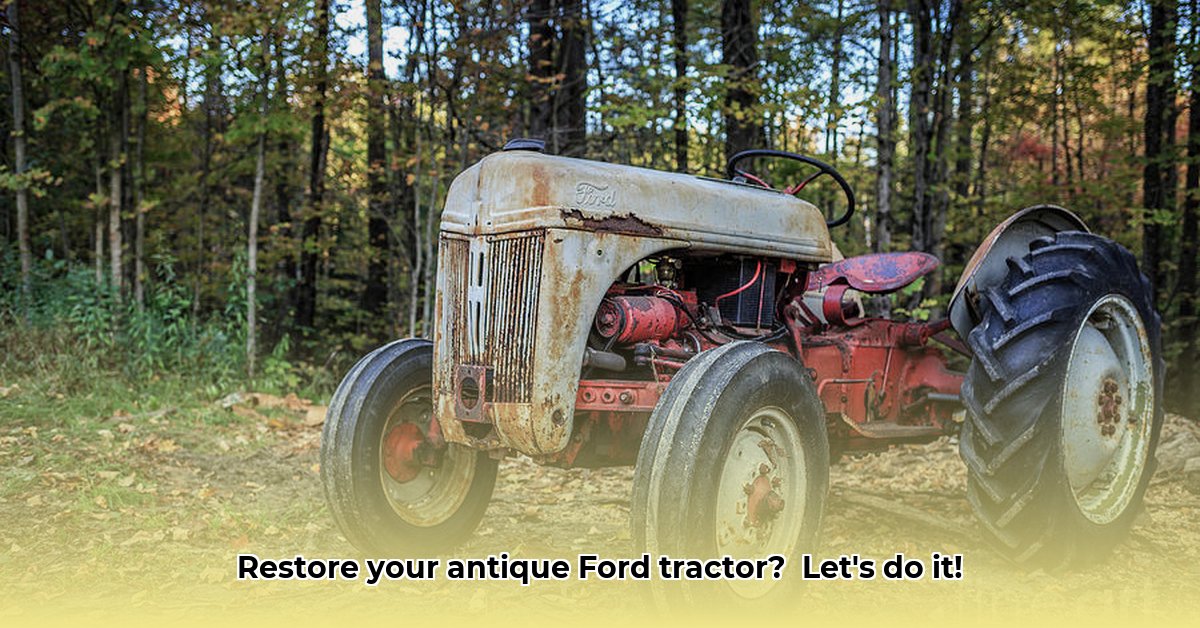
Finding Your Perfect Ford Tractor Project
Embarking on the journey of antique Ford tractor restoration begins with finding the right machine. Consider your mechanical aptitude, budget, and available workspace. Are you drawn to the popularity and readily available parts of an 8N, or do you yearn for the challenge of a rarer model? Online auction sites and classified ads are excellent starting points for your search. However, before making a purchase, meticulously inspect any potential tractor. Look for signs of rust, significant mechanical issues, and missing parts. Taking detailed photographs will prove invaluable, allowing you to document the initial condition and track your progress. This preemptive due diligence can save you considerable time and money later. What model are you most drawn to, and why? For more information on Ford tractor models, check out this helpful resource.
Assessing the Restoration Needs: A Detailed Plan
Once you've acquired your project, a thorough assessment is critical. This step determines the project's scope and associated costs. What needs repair? Which parts require replacement? Prioritize essential repairs; getting the engine running before focusing on cosmetics is often advisable. Creating a comprehensive checklist for all necessary repairs and parts aids organization throughout the sourcing process. Think of this as your restoration roadmap, breaking down a potentially overwhelming task into manageable steps. How will you organize the numerous tasks involved in restoration?
Sourcing Parts: The Treasure Hunt Begins
Sourcing parts is often the most challenging aspect. Popular models like the 8N boast readily available parts online and from specialized suppliers. However, rarer models require more extensive research. Online forums dedicated to Ford tractors provide invaluable connections with fellow enthusiasts who may possess the parts you need or know where to find them. Consider innovative solutions like 3D printing for exceptionally elusive components; many hobbyists utilize this technology to reproduce hard-to-find parts. Starting your part search early is essential, as sourcing rare items can be time-consuming. What strategies will you employ to locate those hard-to-find pieces?
Engine Restoration: Bringing Your Tractor Back to Life
Engine restoration is often the most technically demanding phase. Begin by thoroughly cleaning the engine block, removing all dirt and debris. Meticulously inspect major components (crankshaft, pistons, cylinder heads, etc.) for wear and tear. Rebuild or replace worn components as needed. Detailed repair manuals and online resources are indispensable during this phase. Patience is key; taking your time ensures a smoothly running, reliable engine. Completing this crucial step is an enormous achievement, marking a significant milestone on your tractor's road to recovery. What resources will you use to guide your engine rebuilding process?
Transmission and Drivetrain: Smooth Sailing Ahead
The transmission and drivetrain are crucial for functionality. Inspect the gears for wear and tear; replace any damaged components. Check bearings and seals, which are vital for smooth shifting and efficient power transfer. Replacing worn parts ensures reliable performance and a pleasant driving experience. This aspect is critical to the longevity and performance of your restored tractor. What are the common issues found in antique Ford tractor transmissions?
Paint and Bodywork: Aesthetics Matter
Once the major mechanical work is complete, turn your attention to aesthetics. Thoroughly clean the tractor, addressing rust and dents using appropriate repair techniques. Prime the surface for optimal paint adhesion. Choose your paint; you may opt for a historically accurate color or a color reflecting personal preference. Apply several coats, with sufficient drying time between each. A high quality paint job not only improves the tractor's appearance, but also provides crucial protection against future wear and tear. What type of paint will give your tractor both lasting protection and a historically accurate finish?
Safety and Compliance: Responsible Restoration
Prioritize safety. Before operating your restored tractor, conduct a thorough inspection, ensuring all components (brakes, lights, steering) are fully functional and safe. Familiarize yourself with local regulations regarding antique vehicles; this may include registration requirements or operational guidelines for older agricultural equipment. Adherence to these regulations ensures safe and responsible operation. What local regulations must be addressed before operating your restored tractor?
Challenges and Rewards: The Heart of the Hobby
Antique tractor restoration presents challenges, including parts sourcing, complex mechanical repairs, and potential costs. However, the rewards are substantial. You'll gain valuable mechanical skills, connect with a passionate community, and own a piece of living history. The satisfaction of operating a fully restored tractor is unmatched; a testament to your hard work and dedication. What aspect of the restoration process are you most looking forward to?
Market Value and Future Trends for Your Antique Tractor
The market for restored antique Ford tractors is generally robust, though value depends on the model, restoration quality, and overall condition. Monitor online marketplaces and auction sites to gauge market trends. However, the monetary value should not be the primary motivation; the satisfaction of ownership is its own reward. What strategies can you use to estimate the current value of your restored tractor?
Helpful Resources: A Comprehensive Guide
| Resource Type | Examples | Benefits |
|---|---|---|
| Online Forums | Various online tractor forums | Connecting with other enthusiasts, finding parts, accessing advice |
| Specialized Suppliers | Numerous online and brick-and-mortar suppliers | Access to new, used, and reproduction parts |
| Repair Manuals | Many available online and in print | Detailed instructions for restoration and maintenance |
Restoring an antique Ford tractor is a journey, not a race. Enjoy the process, learn from challenges, and celebrate milestones along the way!